Documentation
Update 5
The winter wheat trials have started and now we are waiting for the first results

This research project aims to develop wheat plants with improved, multiple and durable fungal tolerance through new breeding methods. This is reflected in the project name: Fungal tolerance of wheat by new breeding methods (“Pilztoleranz von Weizen mittels neuer Züchtungsmethoden” = PILTON).
New breeding methods are said to have great potential to shorten the development of plant varieties with improved characteristics for resource-efficient and productive agriculture. The project will investigate how fungus-tolerant wheat can significantly reduce the use of plant protection products. In addition, the project will also address the question of how currently available genome editing technologies, such as CRISPR/Cas, can be used by small and medium-sized plant breeding companies in particular in view of existing property rights.
You can find out more about the PILTON project in our flyer.
Right: Wheat leaf with fungal infestation

This research project aims to develop wheat plants with improved, multiple and durable fungal tolerance through new breeding methods. This is reflected in the project name: Fungal tolerance of wheat by new breeding methods (“Pilztoleranz von Weizen mittels neuer Züchtungsmethoden” = PILTON).
New breeding methods are said to have great potential to shorten the development of plant varieties with improved characteristics for resource-efficient and productive agriculture. The project will investigate how fungus-tolerant wheat can significantly reduce the use of plant protection products. In addition, the project will also address the question of how currently available genome editing technologies, such as CRISPR/Cas, can be used by small and medium-sized plant breeding companies in particular in view of existing property rights.
You can find out more about the PILTON project in our flyer.
The PILTON project is accompanied by the German Plant Breeders Association (Verband Deutscher Pflanzenzüchter = BDP). The basics and background of the research project are explained in the introductory film.
Continuous video updates will document the progress and results of the project.
The BDP press release on the project launch can be found here.
The winter wheat trials have started and now we are waiting for the first results
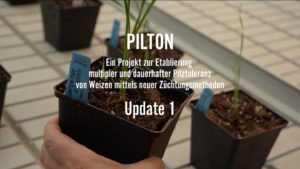
Dr. Dietmar Stahl, scientific director of the Pilton project, explains the current status in the video.
The expert interviews provide a deeper insight into the topic of genome editing and plant breeding.
Scientific, breeding and legal issues are examined.

About the first tests of susceptibility to fungal pathogens.
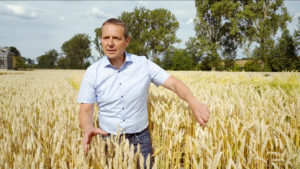
Plant breeder Dr. Stefan Streng on breeding, CRISPR and the benefits of new breeding methods.
CRISPR stands for “Clustered Regularly Interspaced Short Palindromic Repeats” These repeats were first discovered in bacteria and are part of the natural bacterial immune system that bacteria use to protect themselves against viruses.
Just like humans, bacteria can be attacked by viruses (so-called phages) and have developed sophisticated defenses against such an attack. When a phage docks on a bacterial cell and injects its genetic material, part of this viral genetic material is incorporated into the bacterial DNA as so-called spacers (hence the “interspaced” in CRISPR) (i. e., in the palindromic repeats). When the bacteria re-infect, these incorporated pieces allow them to identify and specifically cut the viral DNA to stop infection. This system is therefore something like a genetic memory of the bacterium.
Scientists have discovered that this mechanism can also be transferred to other organisms and can thus be used as a genome editing tool in plant breeding to recognise and cut DNA.
To find out exactly what palindromes are and how bacteria use CRISPR in combination with a protein to fight viruses, read on:
Cas9 is one of the proteins (endonucleases) that interact with the bacterial immune system CRISPR (Cas = CRISPR associated) and is used for genome editing.
Cas9 uses an RNA molecule to find a complementary DNA sequence. The complementary DNA sequence can be selected so that it occurs only once in the entire genome. Once this target DNA is identified, Cas9 cuts both DNA strands.
This precise cutting has led to the CRISPR technology being referred to as “molecular scissors” or “scalpel”. Many other endonucleases, such as Cpf1, are now available to scientists and breeders with a wide range of properties.
A CRISPR system with characteristics different from Cas9.
Like Cas9, Cpf1 is an endonuclease and also functions as a “molecular scissor”. However, it is smaller than Cas9, which facilitates its release into cells and tissues. And it cuts the DNA strands in a staggered fashion, leaving short overhangs at the exposed ends. Cpf1 is also referred to as Cas12a. Both terms refer to the same endonuclease.
In addition to Cas9 and Cpf1, there are many other nucleases used in CRISPR systems. Another variant is the MAD7 nuclease, which has other specific properties. The selection of the endonuclease usually depends on the objective.
In July 2018 (case C-528/16), the European Court of Justice (ECJ) generally classified plants from new breeding methods as genetically modified organisms (GMOs), irrespective of the type of modification. According to this ruling, all plants produced using methods of targeted mutagenesis, such as genome editing, shall be approved as GMOs in future and are subject to the strict requirements of genetic engineering law with regard to monitoring, labelling and traceability.
Genetic modifications such as those obtained by targeted mutagenesis can also result from natural processes or conventional breeding methods. As a result of the ECJ ruling, plants with identical characteristics and identical genetic make-up are assessed differently, solely on the basis of the method used in breeding.
Experimental releases (also known as field trials) of genetically modified plants must be approved by the competent authority before being sown. Following the ruling of the European Court of Justice (ECJ) in July 2018, this shall also apply to plants that have been bred using new breeding methods.
Release trials are necessary to test and compare the properties of the plants in the field under real environmental conditions. In a release experiment, preventive isolation measures are taken to minimise the spread of the test plants. The application documents are submitted to the competent federal authority, the Federal Office of Consumer Protection and Food Safety (BVL). The BVL then examines the project in consultation with the Federal Agency for Nature Conservation (BfN), the Federal Institute for Risk Assessment (BfR) and the Robert Koch Institute (RKI) and decides on a release. The Julius Kühn Institute – Federal Research Centre for Cultivated Plants (JKI), the Central Commission for Biological Safety (ZKBS) and the competent authority of the respective federal state then issue their opinions. The approval of the release may be subject to additional conditions and always refers to a defined duration and a defined location, which is listed in a public register.
A fungicide is a plant protection product which kills fungi and/or their spores harmful to plants and/or prevents their growth for the time of its activity. Fungicides are used as soon as it becomes apparent that the crop is affected by a fungal disease.
The main fungi affecting wheat are leaf rust, strip rust, septoria and fusarium.
Gene expression is the process by which the cell activates and reads a specific information stored in the genetic material (DNA). The most common result of this process is the production of a specific protein. To do this, the cell interprets the genetic code and adds one of 20 different amino acids for each group of three letters. The amino acids are the basic units needed to build proteins. This process can be specifically modified, for example by reducing gene expression.
Genome editing is the name given to a group of new breeding technologies that scientists can use to modify the DNA of an organism. These changes in the DNA sequence can be single base exchanges (as they can occur naturally) or the removal or insertion of genetic material. The best known of these technologies is called “CRISPR”, which stands for “Clustered Regularly Interspaced Short Palindromic Repeats”. The basis of CRISPR technology is a natural system that uses bacteria to protect against viruses.
With CRISPR technology, changes in the genome can be made more precisely and easily than with previous methods.
Just like us humans, plants are attacked by bacteria, viruses and fungi, and they have developed defence mechanisms to defend themselves against these pests. Even if they have no antibodies against pests, they can use immune receptors to recognise pathogens on their surface and then take specific defensive measures (for example, closing their stomata or strengthening the cell walls).
A permanent alteration of the genetic material. Mutations can occur spontaneously or be caused by external influences of mutagens such as radioactive radiation or chemicals. The change can be small (individual base pair exchanges, see also definition of “sequencing”), involve thousands of base pairs (insertions, deletions, translocations) or can affect entire chromosomes.
In breeding, people have for a long time deliberately created mutations in the genome of plants to create new variability in the genome, which can then produce new characteristics.
This term covers new methods of plant breeding that create very precise changes and variability in plants. This precision and efficiency distinguishes them from conventional breeding methods such as random mutagenesis using chemicals or radioactive radiation.
Examples of these methods are cisgenesis, agro-infiltration and the methods for targeted mutagenesis such as CRISPR, TALEN and zinc finger nuclease (ZFN).
Humans started changing plants more than 10,000 years ago. The aim of any plant breeding is to genetically modify plants in such a way that they are better adapted to the demands that humans make on them.
In cross-breeding, the breeder deliberately selects plants with the desired characteristics and crosses them with each other. The next generation resulting from this crossing is propagated and then further selected for the desired trait. This process is continued until a new variety with improved properties is finally produced.
Over time, depending on the crop, numerous breeding methods have developed, such as clone breeding (e.g. potato, apple, sugar cane), line breeding (e.g. cereals such as wheat), hybrid breeding (e.g. sugar beet, rape, maize) and population breeding (e.g. cabbage).
A repressor is a protein that negatively regulates the expression of one or more genes, i.e. usually suppresses expression. The repressor protein binds to the promoter region of the gene and thus prevents the production of messenger RNA (mRNA).
When DNA is sequenced, the sequence of the four DNA building blocks is determined by means of chemical analysis methods. The DNA building blocks are called bases. From the sequence, scientists can use computer models to determine the type of genetic information contained in a particular segment of DNA.
For example, scientists can use sequence information to determine which DNA segments contain genes or have regulatory functions.
A fungus-tolerant wheat variety can be infected by fungi such as leaf rust, strip rust, Septoria or Fusarium. However, the plant is so robust that there is no complete loss of vitality or atrophy of the ears, resulting in a significant loss of yield.
Common wheat (Triticum aestivum L.) is the most widespread crop on earth and is one of the most important protein resources. However, compared to other crops, the genome of wheat is large and extremely complicated, as it consists of three sub-genomes.
Website of the international consortium on the sequencing of the wheat genome
Soll man die neuen genomischen Gentechniken für die Landwirtschaft anders als die „alte Gentechnik“ regulieren? Mit den ethischen, rechtlichen und sozialen Fragen befasste sich eine BMBF-geförderte Tagung in der Evangelischen Akademie Tutzing (21. bis 22. Februar 2024)
Wo steht die Züchtung und was leisten neue Züchtungsmethoden?
Dr. Carl-Stephan Schäfer, Geschäftsführer BDP.
Der Film beleuchtet Argumente für und gegen die sogenannte neue Gentechnik. Das Gemeinschaftsforschungsprojekt PILTON wird als Praxisbeispiel erklärt.
Das deutsche Gemeinschaftsforschungsprojekt PILTON arbeitet an der Etablierung multipler und dauerhafter Pilztoleranz von Weizen mittels neuer Züchtungsmethoden. Es soll geprüft werden, welchen Nutzen neue Züchtungsmethoden für eine ressourcenschonende und produktive Landwirtschaft haben.
In diesem Artikel beleuchten Dr. Anja Matzk und Dr. Dietmar Stahl verschiedene Aspekte des Pilton Projekts und erläutern das wissenschaftliche Vorgehen.
How 55 German seed companies joined forces to speed up breeding towards fungi resistance.
Mit dem Klimawandel wird es nicht nur trockener und heißer. Wärmeliebende Schädlinge und Krankheitserreger wandern weiter nach Norden – in Regionen, in denen sie bisher nicht vorkamen und deswegen leichtes Spiel mit den Pflanzen auf den Feldern haben. Bis die Züchter neue, besser angepasste Sorten entwickelt haben, kann es viele Jahre dauern - zu lange, um dem Tempo des Klimawandels folgen zu können. Mit neuen Verfahren wie der Gen-Schere CRISPR/Cas könnte es schneller gehen.
Gentechnische Anwendungen haben im Zuge der Impfstoffentwicklung an Akzeptanz in der Gesellschaft gewonnen und sind in der öffentlichen Debatte omnipräsent.
Die neuen Züchtungsmethoden können die Pflanzenzüchtung präziser und schneller machen. Dem stehen jedoch die Vorbehalte der Bevölkerung in Europa entgegen, während auf dem übrigen Globus diese Formen der Züchtung bereits zur Anwendung kommen.
Mit diesem Projekt Pilton soll insbesondere das Potenzial zur signifikanten Einsparung von Pflanzenschutzmitteln verdeutlicht und quantifiziert werden. Außerdem wollen die Projektpartner aufzeigen, wie derzeit angebotene Technologien im Bereich der Genom-Editierung von Unternehmen der Pflanzenzüchtung, auch vor dem Hintergrund bestehender Schutzrechte, genutzt werden können.
Die Summe dieser neuen Strategien zur Erzeugung von Lebensmitteln ist eine Art Gesamtkunstwerk. Zu dessen vielen Bausteinen gehört auch die Pflanzenzüchtung, zentral und unverzichtbar. Pflanzenzüchtung ist ein uraltes Handwerk, das mit der Entdeckung der Mendelschen Gesetze Mitte des 19. Jahrhunderts einen gewissen quantitativen Charakter angenommen hat.
So gesehen, kann Stefan Streng sich auf ein mutiges Vorbild berufen. Er hat sich nämlich dazu entschieden, sich auf das Wagnis CRISPR-Cas einzulassen. Mit anderen Züchtern hat er sich zusammengeschlossen, um mit der sogenannten Genschere eine neue Weizensorte zu züchten, die gegen Pilzerkrankungen resistent sein soll. „Wir müssen diese Technik kennenlernen, sonst wird uns die Konkurrenz aus dem Ausland links und rechts überholen“, argumentiert Streng.
Gelb- und Schwarzrost, sonst eher in Südeuropa heimisch, bedrohen hierzulande den Weizenanbau. Im bislang ersten Versuch dieser Art in Deutschland setzte ein Pflanzenzuchtunternehmen die "Gen-Schere" CRISPR/Cas ein. Die genetisch veränderten Pflanzen zeigten innerhalb kürzester Zeit Abwehrkräfte gegen Pilze.
#Biotechnologie und #Gentechnologie gehören zu den innovativen Querschnittstechnologien. Sie haben ein hohes wirtschaftliches Potenzial und sie können uns helfen, dringenden Herausforderungen zu begegnen. Welche Potenziale neue genomische Verfahren für die #Landwirtschaft haben, darüber sprechen wir mit Dr. Hagen Duenbostel, der Vorstandssprecher von KWS in Einbeck ist.
Mit der nobelpreisgekrönten Technologie CRISPR-Cas9 könnte die Landwirtschaft revolutioniert werden. Doch noch stehen gesetzliche Hürden im Weg. Eine Diskussion lohnt sich, sagen Forscher, wenn Deutschland führend in der Pflanzenforschung bleiben will.
Es gibt zahllose Arten von Pilzen, die vor allem verschiedene Getreidesorten befallen. Besonders Ökobauern haben vermehrt mit den Pilzen zu kämpfen, da sie keine Pestizide verwenden und so weniger Möglichkeiten haben, ihre Pflanzen zu schützen.
„Pflanzenzüchtung muss im Hinblick auf die Leistungen für die ökonomische Stabilität der Landwirtschaft, den Einfluss auf Umweltschutz und Ressourcenschonung sowie die Wirkung auf Klimawandel und Klimaschutz bewertet werden.“ Über die Konzepte der Züchter sprach Stephanie Franck, Vorsitzende des Bundesverbandes Deutscher Pflanzenzüchter.
Die Konrad-Adenauer-Stiftung führte die Veranstaltung „Neue Gentechnik in der Landwirtschaft: Chancen und Herausforderungen“ durch, um ausgehend von der Studie der Europäischen Kommission über die Potenziale und Kritikpunkte an der Neuen Gentechnik zu diskutieren.
Die BDP-Vorsitzende Stephanie Franck blickt im Interview mit dem Getreidemagazin auf verschiedene Aspekte der vielschichtigen Debatte zu den neuen Züchtungsmethoden. Die Erkenntnisse aus dem PILTON-Projekt leisten einen wichtigen Beitrag zum aktuellen Diskurs.
Was Anja Matzk da mit einem Team von Forschern im Pilton-Projekt bei KWS Saat in Einbeck testet, soll nichts anderes werden, als mindestens eine kleine Revolution in der Landwirtschaft.
Im Interview mit Herbert Dorfmann, Mitglied im Europäischen Parlament, wird die Debatte um die neuen Züchtungsmethoden in Europa beleuchtet. Dorfmann stellt heraus, dass die Ziele der Farm-to-Fork-Strategie der EU nur mit mehr Offenheit der Gesellschaft gegenüber Innovationen aus dem Food- und Agrarbereich erreicht werden können.
In der Talkrunde des Forums Moderne Landwirtschaft diskutieren Dr. Stefan Streng, Pflanzenzüchter und Landwirt, und Christoph Kannengießer, Hauptgeschäftsführer des Afrika-Vereins der deutschen Wirtschaft, welchen Herausforderungen sich die globale Landwirtschaft stellen muss. Dr. Streng gibt einen Einblick in Lösungsstrategien aus der Pflanzenzüchtung und stellt PILTON vor.
Im Seminar des Landesbauernverbands Baden-Württemberg am 3. Februar 2021 steht die Bedeutung der neuen Züchtungsmethoden für die Landwirtschaft im Fokus. Neben Dr. Dominik Modrzejewski (LBV BW) wird Dr. Stefan Streng u. a. zum PILTON-Projekt vortragen. Anmeldungen sind noch möglich.
Im aktuellen Newsletter des Grain Clubs wird das Thema Genome Editing aus verschiedenen Perspektiven betrachtet. Neben den Auswirkungen und notwendigen Bedingungen im Agrarhandel (Interview Manfred Thering) werden neue Züchtungsmethoden mit Blick auf die Gestaltung einer nachhaltigen Landwirtschaft eingeordnet (Beitrag Prof. Urs Niggli).
Der Fernsehbeitrag, der im Format Nano auf 3Sat ausgestrahlt wurde, beleuchtet verschiedene Aspekte des Diskurses zu neuen Züchtungsmethoden. Dr. Stefan Streng vertritt die Perspektive der Pflanzenzüchter.
Der Plan: Mit einem präzisen Eingriff in die Weizen-DNA soll ein Gen ausgeschaltet werden, das die natürlich vorhandenen Schutzmechanismen der Pflanze gegen Schadpilze herunterreguliert. Das Ergebnis ist keine transgene Pflanze, sondern könnte auch durch zufällige (natürliche) Mutationen entstehen. Die ersten Pflanzen wachsen schon im Gewächshaus, die Wirksamkeit des Eingriffs wird derzeit überprüft.
Mit der Genschere CRISPR-Cas lässt sich das Erbgut von Nutzpflanzen gezielt bearbeiten. In Europa werden genom-editierte Pflanzen als gentechnisch veränderte Organismen eingestuft. Doch aus Wissenschaft und Wirtschaft regt sich zunehmend Kritik. Dieser Trendbericht gibt einen Überblick über die Debatte.
Grüne Gentechnik ist in Europa tabu. Jetzt wollen deutsche Pflanzenzüchter daran etwas ändern. Sebastian Balzter und Daniel Pilar (Fotos) haben sich ins Gewächshaus gewagt.
"Ohne Gentechnik" – das Siegel ziert viele Lebensmittel und soll Vertrauen schaffen. Doch können wir es uns auf Dauer leisten, angesichts steigender Bevölkerungszahlen und erschwerter Anbaubedingungen etwa durch den Klimawandel auf die neuen Methoden in der Landwirtschaft zu verzichten?
Beitrag des DLF zu PILTON und Crispr anlässlich des Dialogs Genome Editing vom 9.11.2020.
Aufzeichnung des "Dialog Genome Editing“ vom 9.11.2020 mit Dr. Sabine Jülicher (Europäische Kommission), Prof. Dr. Urs Niggli (Institute of Sustainable Food & Farming Systems (agroecology.science)) und Dr. Jon Falk (Saaten-Union Biotec GmbH).
Ist der Hype um die neue Züchtungsmethode in der Landwirtschaft gerechtfertigt? Wie soll man die Veränderung des Genoms regulieren? Drei Expertinnen und Experten machen in einem Online-Seminar des Grain Club und von Verbänden wie dem DBV ihre Standpunkte klar.
Eine zukunftsfähige Landwirtschaft braucht ertragreiche UND ressourcenschonende Sorten. Das erfordert eine vorurteilsfreie Diskussion über ALLE Methoden der Pflanzenzüchtung. Dr. Carl-Stephan Schäfer zum #DialogGenomeEditing
Deutsche Pflanzenzüchter entwickeln gemeinsam einen pilztoleranten Weizen und nutzen dafür das Genome Editing. Sie hoffen, dass eine solche nützliche Eigenschaft Akzeptanz für die Technologie schafft. Weizenzüchter Stefan Streng freut sich über Rückenwind durch den Nobelpreis für Chemie.
Zu Recht erhalten die Entdeckerinnen von #CRISPR diese Auszeichnung. Mit ihren bahnbrechenden Entdeckungen haben sie nicht nur die Arbeit von Pflanzenforschern und -züchtern maßgeblich beeinflusst, sondern viele Bereiche der Lebenswissenschaften revolutioniert.
Fast 60 deutsche Pflanzenzüchtungsunternehmen haben ein gemeinsames Forschungsprojekt (PILTON) gestartet: Sie wollen Weizen mit einer besseren und dauerhaften Widerstandsfähigkeit gegenüber Pilzkrankheiten entwickeln – und das gleich gegen vier dieser Erreger.
Fast 60 deutsche Züchter gehen jetzt in die Offensive. Mit dem Gemeinschaftsprojekt PILTON wollen sie die Pilztoleranz von Weizen verbessern und damit zeigen, welchen Nutzen neuen Technologien haben, um neuen Herausforderungen im Ackerbau zu begegnen. Wir haben mit Dr. Stefan Streng gesprochen.
Der Klimawandel stellt die Landwirtschaft schon heute vor große Herausforderungen. Extremwetter wie Dürre oder Überschwemmungen setzen die Nutzpflanzen unter Stress, insbesondere Pilzerkrankungen sorgen zum Teil für massive Ernteverluste auf den Äckern.
In einem von fast 60 Pflanzenzüchtungsunternehmen getragenen Projekt sollen Weizenpflanzen mit verbesserter, multipler und dauerhafter Pilztoleranz durch CRISPR/Cas entwickelt werden.
Weizenpflanzen mit verbesserter, multipler und dauerhafter Pilztoleranz durch CRISPR/Cas sollen in einem von fast 60 Pflanzenzüchtungsunternehmen getragenen Projekt entwickelt werden.
Pilton ist die Abkürzung für ein grundlegendes Projekt, das Pflanzenzüchter, Wissenschaftler im Allgemeinen, Landwirte und Politiker gleichermaßen betrifft. Die einen werden sich grundlegend abwenden, die anderen aus verschiedenen Gründen hinwenden.
Ein neues Forschungsprojekt arbeitet mit dem gentechnischen CRISPR/Cas. Ziel ist, pilztoleranten Weizen zu züchten, um Pflanzenschutzmittel zu reduzieren. Doch es gibt einen Knackpunkt.
Ein Bündnis aus Pflanzenzüchtern startet ein Projekt, um pilztoleranten Weizen mittels Genschere zu entwickeln. Mit dessen Vorteilen hoffen sie, die Meinungsbildung zur neuen Züchtungstechnik positiv zu beeinflussen.
Der Bundesverband Deutscher Pflanzenzüchter e. V. (BDP) hat heute in Berlin das Forschungsvorhaben PILTON vorgestellt. In dem von fast 60 Pflanzenzüchtungsunternehmen getragenen Projekt sollen Weizenpflanzen mit verbesserter, multipler und dauerhafter Pilztoleranz durch CRISPR/Cas entwickelt werden.
Ein ungewöhnliches Zuchtprojekt deutscher Mittelständler stellt die Gentechnik-Ablehnung infrage. Ein Kommentar von Andreas Sentker.